Claude Did the Work
At 5.30am this morning Anthropic (Claude) dropped Opus 4.6. Also this week OpenAI dropped their Codex desktop app — equivalent to Cowork by Anthropic.
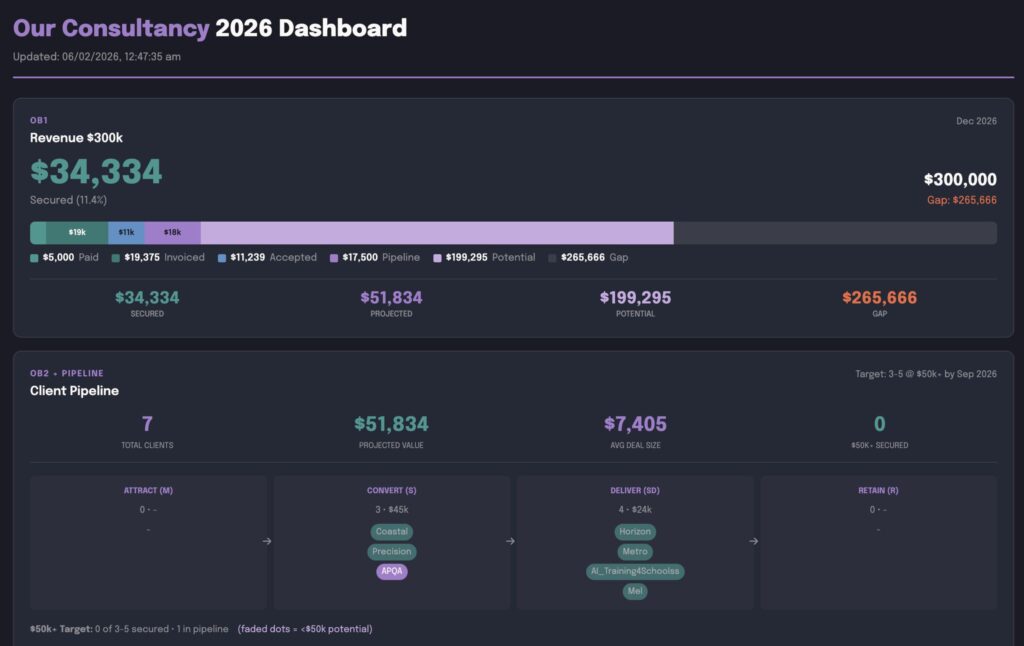
I ran a messy early-morning prompt in each about JOT, our internally built Practice Operating System — a markdown vault that runs our entire consultancy. Pipeline, clients, objectives, daily rituals, dashboards. 313 files across six layers.
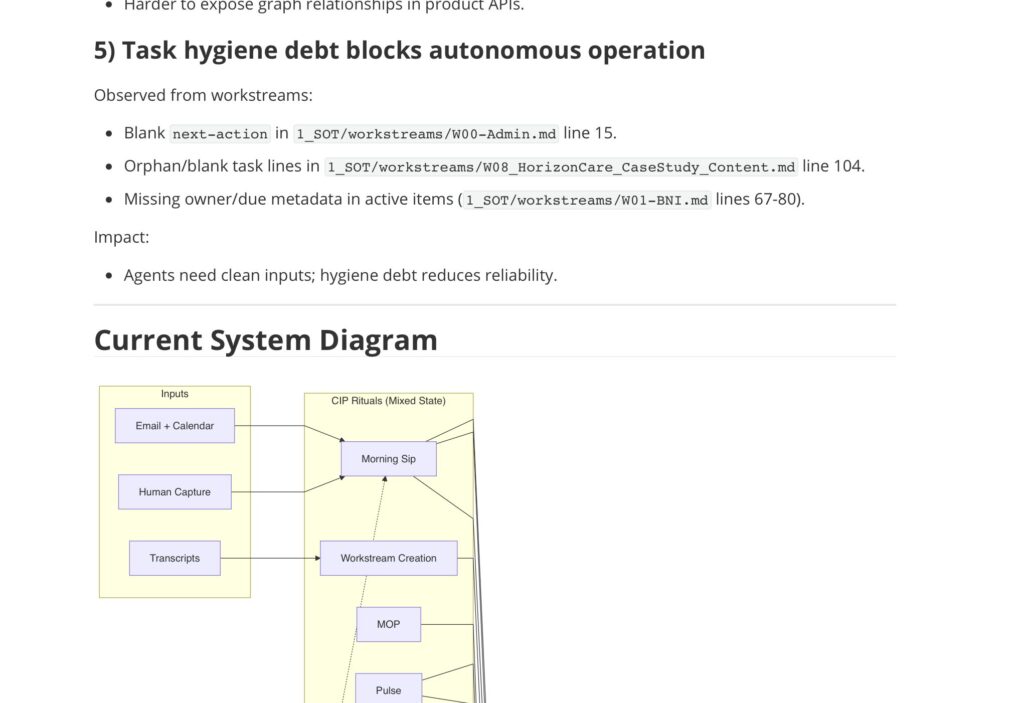
The prompt: review JOT, tell me what’s broken, what could become autonomous agents, and how it could become a product.
What each tool delivered
OpenAI gave me a solid markdown document. Analysis, mermaid diagrams, a phased roadmap, a next-10-tasks list. Competent. Useful. A good report.Claude didn’t write a report. It did the work.
It read 50+ core files in parallel, produced an interactive HTML analysis with six SVG architecture diagrams, then — unprompted — offered to anonymise the entire vault so we could share it. It replaced 30+ organisations, 16 contacts, emails, phone numbers, locations, and revenue figures across 125 files. Renamed 26 files. Fixed every cross-reference and wiki-link. Ran three verification passes until zero stragglers remained.
Then it regenerated our v3 dashboard with the updated figures and rewired the launcher script.
The takeaway
The future is a very different place.